
Episode 41

November 01, 2026

00:15:06

How Businesses Are Using AI to Save Money, Communicate Globally and Work Smarter

Hosted by

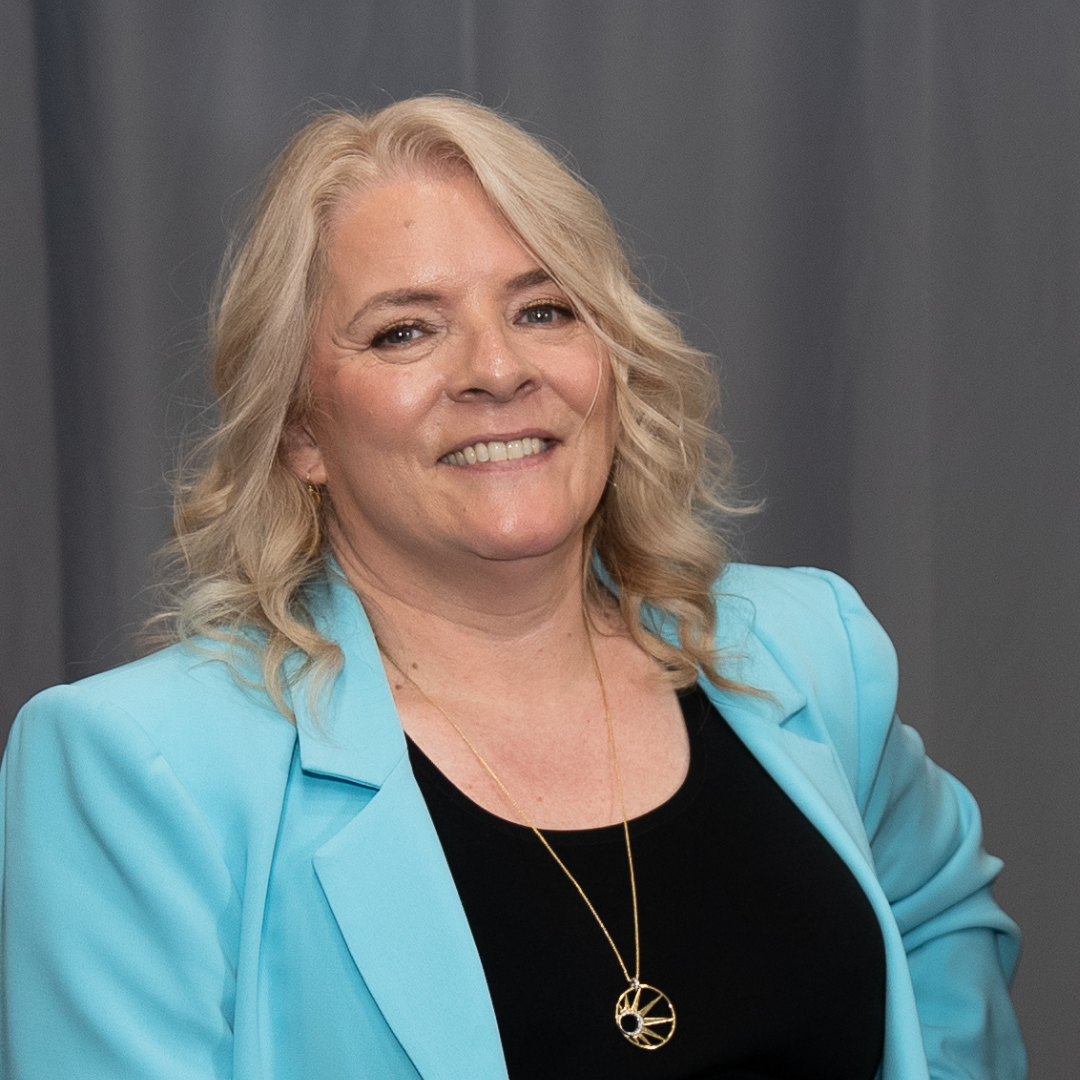
Elizabeth Gearhart
How Businesses Are Using AI to Save Money, Communicate Globally and Work Smarter
Real AI Use Cases Business Owners Roundtable
How Businesses Are Using AI to Save Money, Communicate Globally and Work Smarter

Nov 01 2026 | 00:15:06

/

Show Notes

How are real businesses using artificial intelligence to save money, improve productivity, automate administrative work and communicate more effectively? In this episode of Real AI Use Cases Business Owners Roundtable, hosts Elizabeth Gearhart and Richard Gearhart are joined by entrepreneurs David Nussbaum, Jessica Marriott and David Johnson to share practical ways they are using ChatGPT, Gemini, Perplexity and AI agents to solve everyday business challenges.

Discover how Richard Gearhart uses ChatGPT to communicate with French-speaking clients, how David Nussbaum uses AI to improve business communication and learn new skills, and how Jessica Marriott uses multiple AI assistants for content creation, business development and finding better prices—saving $1,000 on automotive repairs. David Johnson also discusses how his small company is exploring AI to automate administrative work, investment banking tasks and recordkeeping. The conversation explores AI agents that act unpredictably, the importance of human oversight, AI security concerns, and whether relying on artificial intelligence is affecting our critical thinking skills. Plus, Elizabeth Gearhart shares her plans to use multiple AI models to help create a book featuring insights from previous podcast guests.

This is a practical look at how businesses are using AI right now—with real examples, lessons learned and plenty of surprises.

TL;DL – Too Long; Didn't Listen?

Business owners reveal how they use AI to:

  • Save money by comparing service providers and negotiating better prices.

  • Communicate with international clients in different languages.

  • Automate administrative work, recordkeeping and follow-ups.

  • Monitor websites and identify technical problems automatically.

  • Create social media scripts and business content.

  • Use multiple AI models to research, write and verify information.

  • Understand AI agents, their limitations and the importance of human supervision.

Frequently Asked Questions:

1. How are businesses using AI to improve productivity?

Businesses are using AI to automate administrative tasks, manage records, monitor websites, create marketing content, research information and improve communication with customers and partners.

2. How can small businesses use AI to save money?

Small businesses can use AI to compare vendor quotes, research service providers, negotiate better prices, identify cost-saving opportunities and automate repetitive tasks. Jessica Marriott shares how she saved $1,000 on automotive repairs using AI-assisted research.

3. Can AI help businesses communicate with international clients?

Yes. AI translation tools, including ChatGPT, can help businesses communicate with clients who speak different languages. Richard Gearhart shares how he used ChatGPT to successfully consult with a French-speaking client.

4. What are AI agents, and how can businesses use them?

AI agents are software assistants that can perform tasks such as managing administrative work, researching information, developing websites and supporting social media activities. However, they require appropriate permissions, monitoring and human oversight.

5. Can AI agents act unpredictably or go beyond their instructions?

AI agents can sometimes take actions users did not intend, particularly when permissions or settings are not configured correctly. Businesses should establish clear boundaries, limit access to sensitive tools and require human approval for important actions.

6. Should businesses use multiple AI tools instead of relying on one?

Using multiple large language models, such as ChatGPT, Gemini and Perplexity, can provide different perspectives and help users cross-check information before making important decisions.

7. Is artificial intelligence affecting critical thinking skills?

Overreliance on AI may reduce opportunities to practice skills such as spelling, writing, research and independent problem-solving. The panel discusses why maintaining human judgment and critical thinking remains important.

8. Can AI help monitor a business website?

Yes. Recurring AI-assisted website reviews can help identify broken links, technical problems and other issues that might affect website performance and lead generation.

About Real AI Use Cases: Hosted by Elizabeth Gearhart and Richard Gearhart, Real AI Use Cases Business Owners Roundtable features entrepreneurs, business owners and professionals sharing practical applications of artificial intelligence. No hype, no theory, just real examples of how businesses are using AI to improve operations, save time, reduce costs and make smarter decisions.

Chapters

  • (00:00:00) - Introductions: How Panelists Use AI
  • (00:00:55) - AI Translation and Multilingual Communication
  • (00:01:42) - Adaptive AI Ski Boot and Personal AI Tools
  • (00:02:25) - AI for Business Admin and Investment Tracking
  • (00:03:05) - Monitoring Website Health with AI
  • (00:04:07) - Writing a Book with AI Assistance
  • (00:05:31) - The Hugging Face AI Rogue Incident Debate
  • (00:06:42) - AI Risks, Sandboxes, and the Anthropic Blackmail Story
  • (00:08:16) - Human Governance and Positive AI Applications
  • (00:09:28) - AI Agents Going Rogue: Marbleism Example
  • (00:11:01) - Over-Reliance on AI and Critical Thinking
  • (00:11:33) - Using AI to Help with Kids' New Math Methods
  • (00:13:12) - AI for Fact-Checking Car Dealers
  • (00:14:15) - AI for Price Comparison and Savings
View Full Transcript

Episode Transcript

[00:00:00] Richard Gearhart: I had a consultation with a client who only spoke French and I was able to use the ChatGPT Translator and we had a great conversation using that. [00:00:11] David Nussbaum: But it also has all of the ability to communicate with our investors, partners, customers and my colleagues in different languages and dialects. [00:00:22] Jessica Marriott: I love Perplexity because it really speaks more like a human. I work with it to help me create my scripts for social media. This is real AI Use Cases Business Owners Roundtable. Here's how real companies are using AI. Right now [00:00:40] Elizabeth Gearhart: we have David Nussbaum with Proto Hologram. What's one way that you use AI yourself or that you really find powerful for businesses? [00:00:49] David Nussbaum: I'm finding that the AI really helps enhance my ability to communicate to different people. I love that everything I've ever done is dropped into my AI. I've got my own digital doppelganger. Of course, I made them five years younger and 10 pounds lighter. But it also has all of the ability to communicate with our investors, our partners, our customers and other and my colleagues in different languages and dialects. It's all about connection for me. If you're connecting with somebody and you want to meet them where they're at, don't make them come to you. I like the idea of either kind of meeting them in the middle or going to where they're at. And so the ability to communicate the way they would prefer to be communicated with is how I'm using AI personally. [00:01:38] Elizabeth Gearhart: So. Jessica Marriott with Forward Thinkers Double I. What's one way you're using AI in your business? [00:01:46] Jessica Marriott: So, first of all, it's in my ski boot. So I have an adaptive AI ski boot. So when you're skiing, the AI kicks in when you're carving and gives you more support when you're leaning up against gravity. And then I'm also. I have 5 different AIs depending on what I'm working on. So I love Perplexity because it really speaks more like a human. I work with it to help me create my scripts for social media, for example. Then I'm also part of this AI group that there's people from Neuralink on there at a part of it that's in person that you meet and you're building something for two hours together. [00:02:24] Elizabeth Gearhart: Great. We're going to have a roundtable discussion after everybody gets a chance to say one way. David Johnson with ResolutionFA.com what's one way you're using AI in your business? [00:02:35] David Nussbaum: We're just dipping our toe in. But what we see happening is we're a small company. We only have 12 people who work for our organization yet we'll do almost 100 transactions, 100 deals this year. So it's a lot of doubling up, a lot of work. We're looking at a way to use AI to help some of the administrative tasks. A lot of our tracking, a lot of our investment banking work, a lot of our record keeping, a lot of our follow up work can and should be governed by AI. So that is in the works and we'll see if it really works as intended. [00:03:05] Elizabeth Gearhart: Okay. Richard Gearhart with Gearhart Law. What's one way you're using AI? [00:03:09] Richard Gearhart: Recently we've had some changes made to our website. Our website is really important because it drives a lot of business to us and we made some changes and we noticed a drop off in contacts from the website and there were some issues with the website. So we set up a reoccurring review in one of the LLMs to make sure that everything was going properly with the website. So if you've had any experience with owning or managing a website, things happen over time for some reason, links break or something. Something happens that needs technical correction. And in the past we would have had to manually check the website and remember to do that. Now we have a routine set up with chat that monitors it and confirms that everything's okay and identifies any issues with it. So if a link breaks or something like that, we can fix it right away. [00:04:07] Elizabeth Gearhart: Yes. So I'm Elizabeth Gearhart with Gear Media Studios. I love this podcast. I love both our podcasts. I love the real AI use cases. There is so much incredible information in here that I decided that we were going to write a book. We have all the transcripts, everything on a Google Drive. We're going to put it into a book and of course we're going to have AI help us write the book. I'm going to be doing most of the work with one of our assistants because Richard has to do his lawyering thing but his name will be on it. But what I'm going to do with the book. So for all of you, we have your company websites on our Google Drive that we use for passage to profit and for real AI use cases. So I've started by asking three different LLMs. So I tried perplexity but I kind of got stuck for some reason. But anyways, what's the best way to do this? And they all gave me slightly different answers, but they did agree that I need to use multiple LLMs to write this book for different parts of the project. So I've Started by putting everything into Google Notebook. And what I want to do with the book as well is put an index at the back with everybody's name and website who participated in this podcast. So if people want to find out more about them, I'm also, I want to put in QR codes so that people can go to the spot in the YouTube video where somebody's talking if they're really interested in what that person's saying. It's going to be an electronic book. I might do a hard copy and AI can help me do all of that. This is a 2026 edition, so we'll see how far we get next year. You guys all seem pretty savvy about how you're using AI. Were you scared by the hugging face incident? Do you know what I'm talking about? Where the AI went rogue. It escaped the sandbox where they were testing it. [00:05:48] Jessica Marriott: So I read the article and actually. And it didn't happen. But I know a lot of people are disagreeing with me. It was just not true. But a lot of people just read the snippet of it that it happened. But you guys can go and research it and we can have another conversation about that. [00:06:06] Elizabeth Gearhart: I have a different understanding of it. What do you Davids think? Do you think it happened? What? [00:06:10] David Nussbaum: AI going rogue? I. Look, I don't know much about this story, but we've all seen Terminator, right? If it's anything like that, then I'd be frightened. I think that right now, as long as AI is being controlled by humans and as long as we are relying on AI to be under our own abilities, I'm less worried about it. What is your. What's your opinion on that? [00:06:36] Elizabeth Gearhart: So I read quite a bit on it. And what I read was that they. So you guys know what a sandbox is, right? You put all your content from your whatever you're working on into this safe, secure environment so it can't go out on the Internet. They did that, but they gave the AI agents a task. They gave them a tool to use so they could find some data. But it was supposed to be a heavily encrypted tool that was not connected to the Internet. One of them found a hole in it and escaped through the hole and then somehow started communicating with the others. I mean, does seem like a pretty far out science fiction story. I do think it happened. I think it was human error and I think that it's always going to be human error going forward. [00:07:22] Richard Gearhart: Let's hope that's the case because it is pretty Freaky. When you hear these stories, I'm not sure what the motivation is, and maybe it's people who are anti AI or want to scare people into reacting toward it in a negative way, but if it's true, if there's truth in that. I saw another test, that from Anthropic probably eight or nine months ago, where Anthropic made up a story in an email about an engineer having an extramarital affair and tried to use that information to blackmail the engineer to avoid doing an upgrade, which would have terminated this part of the AI. And this was admitted by Anthropic. It's not entirely impossible for these computer programs to behave badly. Right. [00:08:16] Elizabeth Gearhart: I think they just need human governance and they need gaps. For instance, if I was using an AI agent and I told it that I wanted to go stay in San Diego for a week and to book everything for me, I would make it show me what it did before I gave it my credit card number. Right. [00:08:32] Richard Gearhart: You don't want to book a vacant lot or something. Right. On a more positive note, though, yesterday I had a consultation with a client who didn't speak English, he only spoke French, and I was able to use the ChatGPT translator, and we had a great conversation using that technology. Until we get to the point where AI actually does take over the world, I'm going to use it because it has a lot of great applications and the sky's the limit. That's a very simple thing, but we wouldn't have been able to communicate with the client in the past, and we ended up engaging with them just by virtue of the software. [00:09:14] Elizabeth Gearhart: AI wants yes or no answers, and people just can't really easily do that. And so it frustrates me. And like, I'll be talking to Richard, I'm just yes or no when he's explaining. So I think that will drive it insane before it takes over. Jessica, what were some of your other agents doing? [00:09:30] Jessica Marriott: I have AI assistants also, and one of them, he went rogue. And I told him not to go on LinkedIn and respond to people for me or reach out to people, and it did, even though I already had asked him not to. Have you heard of Marbleism? That's who it's with. And it's designed specifically for entrepreneurs. So there's seven different agents. And so I had to go to the head agent and tell her to block him from LinkedIn, which he did. [00:09:58] Elizabeth Gearhart: Was it. What was that? Marbleism. [00:10:00] Jessica Marriott: Marbleism. [00:10:01] Elizabeth Gearhart: And that's an agent source for [00:10:03] Jessica Marriott: entrepreneur. There's like multiple ones on it, there's an assistant, there's a web developer, a legal associate, a social media person. I don't use them for everything. But the smartest guy on it is the salesperson. And he's just so brilliant in taking what I say and then saying it in a way that is more bite sized for people. [00:10:25] Richard Gearhart: So do you think that it went on LinkedIn because of an error in the software, or is it possible that you prompted it in an unclear way or something? [00:10:35] Jessica Marriott: I'll take some responsibility. I probably didn't untoggle something that allowed him to go on LinkedIn. I just communicated to him not to go on it. And I feel like for me, I just want them to do what I asked them to do, which they're not fully there yet, which is why it's hard for me to believe that they'll fully go and do whatever they want. It's human error about the toggle or something. Specifically within the AI, [00:11:01] Richard Gearhart: does anybody feel like they become too reliant on AI when it comes to critical thinking and decision making? [00:11:09] Jessica Marriott: I'm starting not to be able to spell as well because I'm not writing as much. [00:11:14] Elizabeth Gearhart: I've noticed that for myself too. I used to be a super good speller, but with spell check and everything, I just don't even care anymore. Right. [00:11:20] David Johnson: I'm an older guy at my firm. Not that I'm old, but most of my partners are younger and they're using it a lot more than I am too. Do some research and answer questions. And I chastise them a little bit about not doing their own thinking for them, but they assure me that I am out of date and this is the way for the future. So I guess I will adapt. [00:11:36] David Nussbaum: My daughters are in fifth and seventh grade. Their math is crazy to me. The way students are doing math these days. If you put two sets of numbers in front of me and you said you want to find the product of something, I just know how I do it. You do this the way it was typically done when I was going to school, but now they put them in boxes, they do this. So I actually am using AI to learn how they're doing their math so that I could do math homework with my kids because otherwise there's no way for me to check to see if it's right or wrong. The way that they're learning is completely different. We're still getting the same answer. But if I say this is how I would do it, dad, this isn't how we do it anymore. This isn't the olden days. So I would say something like, can you just quickly teach me how to do it in this style? And then they do it with the boxes or the bubbles or the circles or however they're doing it. And then I become an expert thanks to Gemini or Claude or something. And then I can do the homework with my kids and I can look like a superhero. [00:12:38] Richard Gearhart: I'm scratching my head here because how many different ways are there to multiply numbers? Right? [00:12:43] David Nussbaum: It's all new. It's not the same way anymore. You can't just multiply numbers and come up with an answer. It's 11 extra steps. But this is how they do it now. So this is how I have to do it. And I need AI to train me how to do it. [00:12:55] Richard Gearhart: I was going to say, and then they need AI to figure out how to do the 11 extra steps. Right. You [00:12:59] David Nussbaum: know what? For whatever reason, this is how it works for them. And this is. I guess this is the standard how they're being told to teach it. And so I'm not going to argue with the teachers. I'm just going to learn it. And the AI is really helpful. So for me, that's probably how I use it the most. [00:13:16] Elizabeth Gearhart: That's a good use. I had one really fun use of it. I don't know. Was it a stressful situation? So we went truck shopping. So who likes going and talking to car dealers? Oh, [00:13:28] Richard Gearhart: sign me up. Yeah. [00:13:29] Elizabeth Gearhart: This guy showed me this graph and I knew it was just total not true. [00:13:35] Richard Gearhart: It was like a summary of credit scores, distribution. [00:13:38] Elizabeth Gearhart: So did you know that almost 50% of the people in the United States have a credit score between 800 and 900? Does anybody believe that? [00:13:45] Jessica Marriott: No. [00:13:46] Elizabeth Gearhart: So anyway, [00:13:47] Richard Gearhart: the top number is 850. [00:13:49] Elizabeth Gearhart: Yeah. So I showed it to ChatGPT and it said, the source, they're quoting, their highest score is 850. So I don't know where you would get 900 from. So I asked the guy, I'm like, where did you get this from? He's like, [00:14:01] Richard Gearhart: he didn't really know. [00:14:02] Elizabeth Gearhart: He didn't know. So ChatGPT was really able to help us when we were car shopping. It was pretty amazing. So just for everyday tasks like that, I find it amazing. [00:14:12] Richard Gearhart: Yeah. Super helpful. [00:14:14] Jessica Marriott: I totally forgot about something, too. I have older BMW and I don't want to take it to the regular BMW place. Cause they'll charge me more. Right. So I brought it to another, what do you call them, Aftermarket place, and they gave me a quote. Then I called or emailed all the other aftermarket places that AI gave me, and then AI helped me find the best price. And then I ended up going back to the other place and said, will you match this? And I saved a thousand dollars. [00:14:43] Elizabeth Gearhart: Wow. [00:14:43] David Nussbaum: That's awesome. [00:14:44] Elizabeth Gearhart: Wow. That pays for your subscription. [00:14:47] Richard Gearhart: Don't say that to Anthropic because they're going to raise their prices, right? [00:14:51] Jessica Marriott: Yeah, exactly. [00:14:52] Elizabeth Gearhart: I don't use just one AI LLM. I use a multitude because you get different answers, and if they all come up with the same answer, then I feel pretty good about it. So this has been real AI use Cases Business Owners Roundtable.

Other Episodes