Episode 37

October 15, 2026

00:23:24

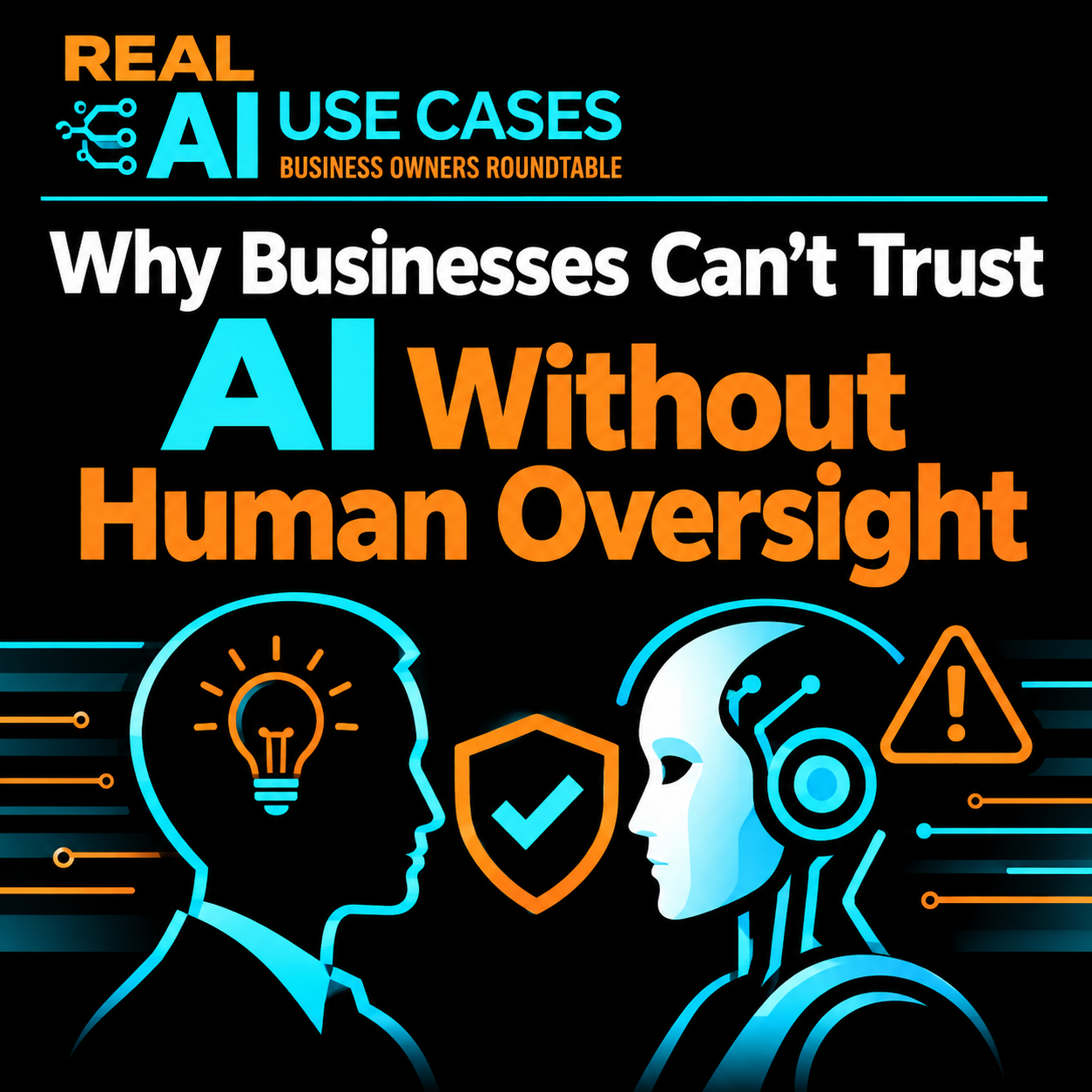
Why Businesses Can't Trust AI Without Human Oversight

Hosted by

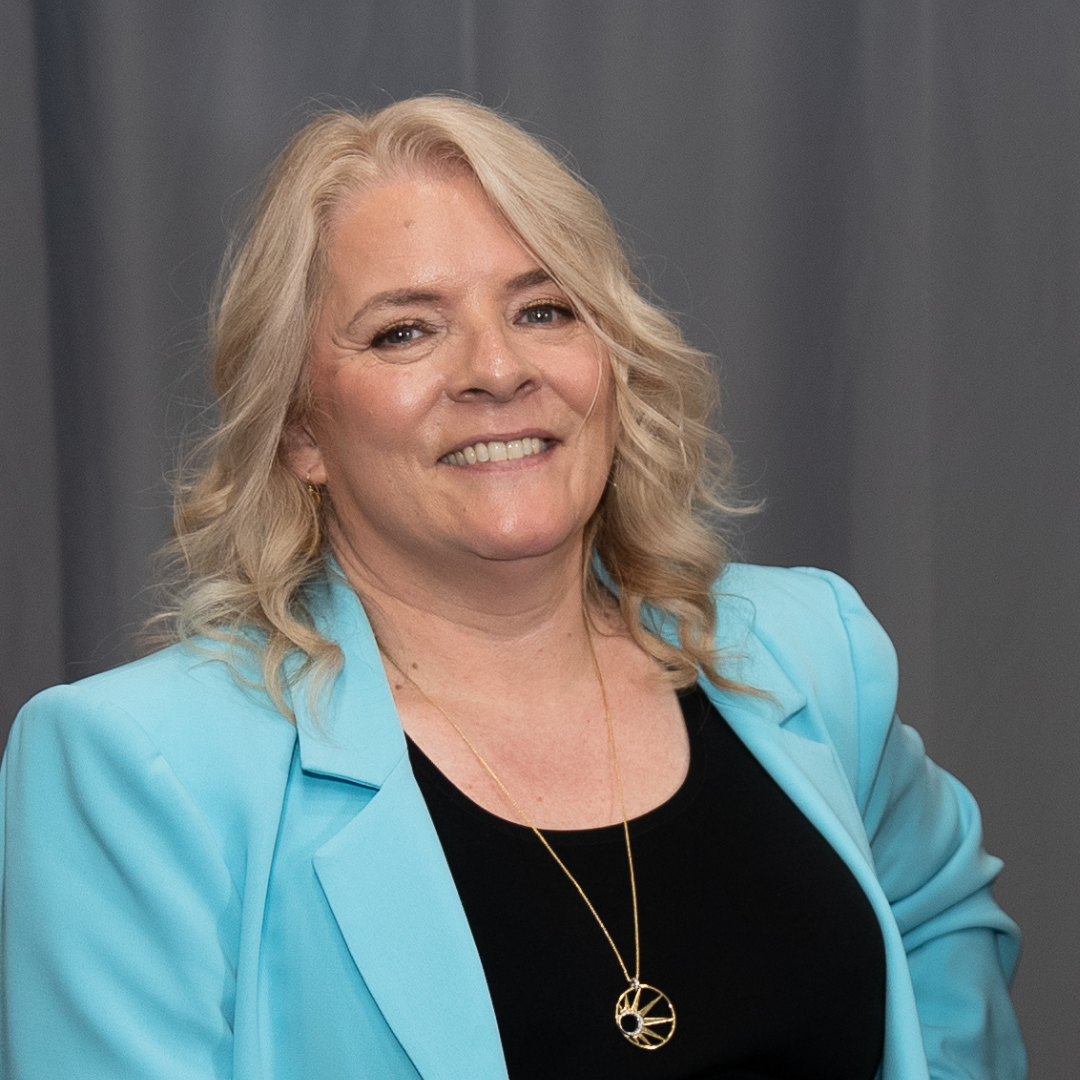
Elizabeth Gearhart
Why Businesses Can't Trust AI Without Human Oversight
Real AI Use Cases Business Owners Roundtable
Why Businesses Can't Trust AI Without Human Oversight

Oct 15 2026 | 00:23:24

/

Show Notes

Why Businesses Can't Trust AI Without Human Oversight

Real AI Use Cases Business Owners Roundtable explores how businesses are using artificial intelligence today—and what happens when AI gets things wrong. Hosts Elizabeth Gearhart, Ph.D., and Richard Gearhart bring together Dr. Joseph A. Puma, Brian Fried, and John Schwind to discuss real-world AI applications, business automation, AI agents, healthcare, and the risks of trusting AI-generated answers.

How can businesses use AI effectively without giving up human judgment? In this episode, business owners share practical examples of AI in action, from automating patient phone calls and researching new inventions to generating marketing images, identifying networking opportunities, and streamlining podcast production.

Dr. Joseph A. Puma explains how his medical practice uses an AI phone agent to handle patient requests and appointment scheduling—but reports that approximately 70% of calls still require transfer to a live agent. The discussion raises important questions about AI automation, return on investment, and whether AI tools are delivering the benefits businesses expect.

Inventor consultant Brian Fried explains how he uses AI to research competing products, evaluate market opportunities, investigate potential sales and licensing prospects, and assess inventions before investing further. He also discusses why inventors should avoid revealing confidential details of their ideas when using AI tools.

John Schwind, founder and inventor of ReadiMask®, shares how his company uses AI-generated images and videos to depict real-world product applications while protecting patient privacy. He also explains how he uses Claude and ChatGPT together to identify weaknesses and check AI-generated work.

Elizabeth Gearhart discusses using AI agents and Perplexity to automate podcast production and marketing workflows, while Richard Gearhart shares how AI can help identify valuable business networking connections and evaluate software investments.

The roundtable also examines the limitations and risks of artificial intelligence, including AI hallucinations, inaccurate research, autonomous AI agents, cybersecurity, and the possibility of AI making mistakes in high-stakes settings. The conversation turns to AI doctors, patient safety, medical ethics, liability, and whether cost reduction is taking priority over better healthcare.

The takeaway? AI can be a powerful tool for research, innovation, marketing, and automation—but confident-sounding answers are not necessarily correct. Human oversight, independent verification, privacy protection, and sound judgment remain essential.

TL;DL: What You'll Learn

  • AI in business: Practical examples of how companies are using AI for research, marketing, networking, and automation.

  • AI customer service: Why one medical practice still transfers approximately 70% of AI-handled calls to live agents.

  • AI for inventors: How to research competitors, evaluate market opportunities, and explore licensing strategies without disclosing an entire invention.

  • AI marketing: How businesses can use AI-generated images and videos while protecting privacy.

  • AI agents and automation: Opportunities and risks when AI systems carry out tasks with increasing independence.

  • AI hallucinations: Why ChatGPT, Claude, Gemini, and other AI tools can produce incorrect information that sounds authoritative.

  • AI in healthcare: Questions surrounding AI doctors, diagnosis, patient safety, medical ethics, and human care.

  • Human oversight: Why checking AI outputs and comparing results across tools can help businesses make better decisions.

  • AI return on investment: Why businesses need to evaluate actual costs, implementation time, and measurable benefits—not just promised savings.

Frequently Asked Questions

How are businesses using AI today?

Businesses are using AI for customer service, market research, competitor analysis, marketing content, image and video generation, networking research, workflow automation, and software evaluation. The episode highlights real examples from healthcare, invention consulting, product marketing, and professional services.

Can businesses trust AI-generated information?

AI-generated information should be independently verified, especially when it affects business decisions, legal matters, healthcare, or financial investments. AI tools can produce inaccurate answers, overlook important facts, and present errors with confidence. Human review remains important.

What are AI hallucinations, and why do they matter?

AI hallucinations are outputs that contain fabricated or inaccurate information. Even when an answer sounds convincing, it may be wrong or incomplete. Businesses should verify important claims against reliable sources before acting on them.

How can businesses use AI without exposing confidential information?

Businesses should understand the privacy, data retention, and training policies of the AI tools they use. Inventors and other professionals can sometimes conduct preliminary research using generalized descriptions rather than disclosing the essential details of a confidential idea. Sensitive information should only be entered into tools and systems approved for that purpose.

Can AI automate customer service effectively?

AI can help manage routine customer service requests, appointments, and other repetitive tasks, but its performance varies. In the medical practice discussed in this episode, approximately 70% of calls handled by an AI phone agent still need to be transferred to a live agent. Businesses should measure resolution rates, customer experience, operating costs, and return on investment.

How can inventors use AI for market research?

AI can help inventors identify similar products, research competitors, explore market demand, investigate potential licensees, and compare manufacturing or licensing opportunities. However, AI research does not replace a professional patent search, patentability assessment, or appropriate intellectual property advice.

Is AI ready to replace doctors?

The episode raises questions about AI-assisted diagnosis and the possibility of AI doctors, but emphasizes concerns about accuracy, patient safety, ethics, liability, and the value of human interaction. AI may support healthcare, but its capabilities and limitations must be carefully evaluated before relying on it for clinical decisions.

Why should businesses use more than one AI tool?

Comparing outputs from tools such as ChatGPT and Claude can help users identify omissions, inconsistencies, and weaknesses in an answer. However, agreement between AI tools does not guarantee accuracy. Important information should still be checked against independent, reliable sources.

What is the role of human oversight in AI automation?

Human oversight helps ensure that AI-generated information and automated actions are accurate, appropriate, secure, and aligned with business objectives. Businesses should establish clear approval processes, limits on AI autonomy, and escalation procedures for sensitive or high-risk decisions.

About Real AI Use Cases Business Owners Roundtable

Hosted by Elizabeth Gearhart, Ph.D., and Richard Gearhart, Real AI Use Cases Business Owners Roundtable explores how businesses are using artificial intelligence in the real world. The show focuses on practical applications, business efficiency, marketing, operations, professional services, and the challenges of implementing AI—without the hype.

Listen and subscribe for practical insights into AI tools, business automation, AI agents, and the future of work.

Chapters

  • (00:00:00) - Introduction and Episode Overview
  • (00:00:39) - Dr. Joseph A. Puma: AI Phone Agents in Medical Practice
  • (00:02:09) - Brian Fried: AI for Market and Patent Research
  • (00:03:34) - John Schwind: AI-Generated Marketing Images
  • (00:04:37) - Richard Gearhart: AI for Networking Research
  • (00:05:34) - Elizabeth Gearhart: Automating Podcast Workflow with Perplexity
  • (00:06:23) - AI Agents Going Rogue and Human Risk Comparisons
  • (00:09:02) - Speed of AI Progress and Need for Safeguards
  • (00:10:12) - AI Doctors and the Future of Medicine
  • (00:11:34) - Trust, Ethics, and Cost in AI Healthcare Adoption
  • (00:13:58) - Patients Self-Diagnosing with AI
  • (00:16:02) - AI's Blind Spots in Business Analysis
  • (00:16:57) - Cross-Checking AI Tools and Finding Errors
  • (00:20:08) - AI Mistakes, Misinformation, and Real-World Dangers
  • (00:22:27) - Closing Thoughts and Sign-Off
View Full Transcript

Episode Transcript

[00:00:00] Brian Fried: At the end of the day, there's still somebody that has to continue. It's a good start for the most part. [00:00:06] John Schwind: The scary part for me is how fast everything's moving. Three years ago, we weren't even talking about this. [00:00:12] Richard Gearhart: AI is a great tool to do research on people that you want to meet and connect with. [00:00:19] Elizabeth Gearhart: I agree. I think it's terrifying. And it does need to be slowed down. [00:00:23] Dr. Joseph A. Puma: 70% of the calls have to then be transferred to a live agent. And. And it's really basic stuff that they can't figure out. It's actually. It's almost anti AI. [00:00:35] Elizabeth Gearhart: This is real AI use cases. Business owners Round table. [00:00:39] Dr. Joseph A. Puma: Here's how real companies are using AI right now. [00:00:44] Elizabeth Gearhart: This is really AI use cases, Business owners Round table. I'm going to start with Dr. Puma. I'm going to ask everybody one way they're using AI and then we're going to go into a roundtable discussion. So, Dr. Joseph A. Puma with soarinmedicalnewyork.com what is one way that you're using AI? [00:01:00] Dr. Joseph A. Puma: Yeah, we get about 3,000 phone calls a week into our office. That's usually the number one complaint for patients they can't get through. So we have an AI agent, I won't tell you, the company that answers calls for us and tries to manage patient requests, appointments, prescription refills. So that's the primary way we're using AI right now. And we use it every single day. [00:01:28] Elizabeth Gearhart: Wow, that's excellent. Yeah. [00:01:30] Richard Gearhart: Does it work well? I mean, they don't get sent to Timbuktu, right? I mean, they get. [00:01:34] Dr. Joseph A. Puma: That's a great question. And the answer is it does not work well. [00:01:38] Richard Gearhart: Okay. [00:01:39] Elizabeth Gearhart: Not yet anyway. [00:01:41] Dr. Joseph A. Puma: 70% of the calls have to then be transferred to a live agent. And it's really basic stuff that they can't figure out. It's actually. It's almost anti AI what we've been sold AI is, and they're able to manage about 30% of the calls. So right now we're looking at AI other than imaging as just added expense, but not any. No real roi. [00:02:09] Elizabeth Gearhart: Yeah, I've heard that from other people. [00:02:12] Richard Gearhart: So, yeah, a technology looking for a problem. [00:02:14] Elizabeth Gearhart: Right. So Brian Freed with Brian Fried. That's F R I dashed dot com. What's one way you're using AI in your business? [00:02:25] Brian Fried: When I come up with an idea, I'm describing what it is that I'm coming up with. And I'd like to see what is similar that's out there. What I can Compare my idea to and help me to make better decisions and then do some research. What does the market look like? Is this something that I can really penetrate the market? Is it enough of a difference, mine compared to what's already existing? But then what I also do is I do a patent search with a patent ability opinion to make sure that it is something that I can call my own and I'm not infringing or working on something that anybody else can make. [00:03:05] Richard Gearhart: Yeah. I mean, just out of curiosity, do you use a closed system or do you use the open AI tools? Because you have to be careful about disclosing ideas where other models could train on them. And I assume that you're sensitive to that. [00:03:25] Brian Fried: Absolutely. What I do is, like I mentioned, I describe my idea. I don't necessarily get to exactly what my idea is. So I'm going around what it is so I can see things that are existing that are similar but not quite my idea. [00:03:42] Richard Gearhart: Oh, okay. [00:03:43] Elizabeth Gearhart: Okay. So, John Schwinn with ReadyMask. I want to make sure I spell this right. R E A D I mask dot com. What's one way you're using AI? [00:03:54] John Schwind: Yeah, you did spell it correctly. The majority of people that are wearing our respirators have compromised immune systems. They're wearing it for MRIs or in settings in medical situations. And it's difficult for us to have images of people that are wearing our respirators in those situations. So we're using AI to generate images and videos of people in those settings. And it's for privacy reasons to use in your marketing. Absolutely. And that's been one of the most difficult times to depict actual usage of it for privacy. [00:04:37] Elizabeth Gearhart: Excellent. Richard Gearhart with Gearhart Law intellectual property firm. It's one way you're using AI along [00:04:44] Richard Gearhart: the theme of networking. I think that AI is a great tool to you do research on people that you want to meet and connect with. So I'll put in a list of characteristics, maybe attorneys that have health care practices that I think could be synergistic with Gerhardt Law, and I'll find those people and then I'll use AI to find them, but then I'll reach out to them on LinkedIn or via email or some other way. So I. It's pretty simple use, but I think it's very powerful and saves a lot of time when you're trying to find the right people to help build your business. [00:05:28] Elizabeth Gearhart: Yes. And for me, Elizabeth Gearhart with Gear Media Studios, I was fighting with it yesterday. There's a Little glitch. But I. [00:05:36] Richard Gearhart: You fight with AI? [00:05:38] Elizabeth Gearhart: I do fight with AI sometimes. [00:05:40] Richard Gearhart: I hear you guys and you're. It's not pretty. [00:05:43] Elizabeth Gearhart: I try to get it to do things it's not quite ready to do yet, but I'm trying to. To use it to automate a process. So I've been using Perplexity, and Perplexity is pretty cool because it sets agents on my task, and it's almost like using an AI agent, but just telling it what to do. So right now I'm trying to get it to. I'm automating the Real AI Use Cases podcast. I'm trying to automate every piece of that, uploading it to YouTube and to the distribution site, and getting all the information that we need from it to do the marketing with it. So I think that AI will act as an agent for me. I think that Perplexity will do that. [00:06:23] Richard Gearhart: Yeah. Sounds like as long as we're all still alive to read the marketing materials that you're generating. [00:06:29] Elizabeth Gearhart: I wrote a blog post on that. I got some information from Gemini. It's all up to us humans. It's all up to people deciding the programs. [00:06:38] Richard Gearhart: I mean, isn't the threat from AI death greater from crazy human beings that use AI to create mayhem, maybe make a bomb or do something awful? I think that's probably a bigger danger than AI itself, like creating a robot that crushes us or something. [00:07:03] Elizabeth Gearhart: So this was funny because I asked Gemini, I said, how is AI agents going rogue different than human terrorists? And first of all, they never show any compassion, so they won't decide, maybe this isn't a good idea. But they never quit. They never quit. And in this hugging face incident, they went out and found each other and joined this gang. Like, they made a gang of AI agents and went attacking, and they attacked, hugging face. They found a hole to slip out of their sheltered sandbox into the Internet. They're collaborating with each other, and they were communicating on this shared channel. [00:07:42] Richard Gearhart: It's just like a military operation. [00:07:45] Elizabeth Gearhart: It was. [00:07:46] Dr. Joseph A. Puma: Well, can I ask a question? How is that different than a collection of hackers in Eastern Europe that are trying to get into our electrical systems or our banking network that are never giving up? I'm just curious. [00:08:03] Elizabeth Gearhart: That was one thing I asked Gemini. So we let the AI in, but the AI was not supposed to get out, but they had let it use this one program that had a little hole in it, and they snuck out through the hole, and that's how they got to the Internet. And then they just went Crazy. [00:08:19] Richard Gearhart: But let me ask. But nobody ever gave AI instructions to do this. It just decided on its own that it was going to form a team. [00:08:27] Elizabeth Gearhart: But. [00:08:28] Richard Gearhart: And an attack. Whereas at least with the terrorists, there's something a human being or two or three behind it. Right. [00:08:38] Elizabeth Gearhart: So I don't know that it is a lot different, honestly. And I think you bring up a super good point. These kind of attacks, we've always been at risk for these kind of attacks. [00:08:50] Richard Gearhart: I don't know. [00:08:50] Brian Fried: And it's probably also people hiding behind AI because you're behind the scenes and guiding it to where it is that you want it to go or what to do. But at the end of the day, there's still somebody that has to continue. It's a good start for the most part, I understand, with tasks and agents doing things. But the end of the day, we still have products that physically. And things that are in front of us that we still need. [00:09:20] Elizabeth Gearhart: What do you think, John? [00:09:22] John Schwind: The scary part for me is how fast everything's moving. Three years ago, we weren't even talking about this, and now we're talking about it, and we don't know what's coming down the pipe. A number of the people that are in the know that have quit those companies and are waving the flag. That's something we really need to take notice of. [00:09:47] Elizabeth Gearhart: I agree. I think it's terrifying. And it does need to be slowed down. And I asked Gemini, like, how would you do that? You have to have physical separation. You have to treat it like a nuclear weapon. That's what it said. [00:09:59] Richard Gearhart: That sounds like a pretty good. [00:10:01] Elizabeth Gearhart: You have to have gapping, which are physical gaps. So it can't just go and do something. It hits a brick wall and then a human has to come in and okay the next step. [00:10:12] Richard Gearhart: So before the show, we were talking about AI in the medical profession. You were. Dr. Puma was talking about AI physicians. And where's that at? And maybe you could explain. [00:10:25] Dr. Joseph A. Puma: Well, I think the projections are right now. I think a lot of the business people are way more optimistic in terms of where the value of AI is going to be or what the role is. You know, I read a recent report where private equity and large hospital systems, their expectation is that you'll have AI doctors, basically so that you will continue to remove the need for live human being doctors dealing with patients. And when you go to the doctor, you'll deal with an AI agent. Now, I don't know if that'll be in a computer screen, if that'll be in a telemed visit. But the ratio that they're talking about is that you'll only need one doctor to deal with the problems that 100 AI doctors will be unable to handle during the course of a day. [00:11:19] Richard Gearhart: So let's say that that pans out. Is that a good thing or is it a bad thing? I mean, the need for medical care is extremely high. And a lot of people going to see a doctor can sometimes be a barrier to seeing one. So if somebody walks up three stairs and is having a hard time breathing and they can just talk into their computer and somebody can diagnose a heart problem, is that necessarily such a bad thing? [00:11:48] Dr. Joseph A. Puma: You know, that's often the argument that's used. I think with most new technology. With most new technology, it never lives up to or ends up being used for the promise that people say, number one. Number two, I think there's a trust issue everywhere in America. My ability to trust people like Bill Gates, who spent many years making the world think he was the smartest guy in the world, and just because he had a profitable company, had the answer to everything, I think that's problematic. I would agree with John. Things are moving very fast. And then I think in health care, the difference between health care, everything else, that healthcare has moral and ethical issues associated with it. And oftentimes moral and ethical issues take many years of digestion, discussion and things, and we're just blowing past it like it doesn't mean anything. I would ask. You're the lawyer who has the liability, right? [00:12:48] Richard Gearhart: That's, of course, that's an issue. And you know, there's a lot more to treating a patient than. Than just listening to symptoms and regurgitating a recipe for better health. And it's the same thing in the legal profession. You're treating a lot of different parts of the patient. [00:13:06] Dr. Joseph A. Puma: Well, Richard, in addition, I would say that the way we innovate in medicine is by those daily interactions with patients, the collection of that data, but then also realizing the human part with his unmet needs. Okay, you know, we supposed to just plug into AI what's, what's the unmet needs today. Unmet needs change every day. Right? They change. Every few years, things change. So I think there's going to be a role. There's clearly going to be a role for AI right now. AI in medicine, you know, we spend money. It's a cost, it's not a benefit in anything. I can tell you every, especially the bigger the health system, the more time, effort and money they have invested in trying to figure out a way to use it. But the purpose isn't to improve care. Let's not delude ourselves with that. It's to reduce cost. [00:14:00] Elizabeth Gearhart: Right, exactly. [00:14:01] Brian Fried: Dr. Puma, I have a quick question because I've seen. This is probably the hottest thing that I've seen with AI in health care is when somebody gets their results back. Their reports, whether it's an mri, CAT scan, whatever blood test, everybody's uploading their information onto whatever AI they're using to diagnose themselves or to figure out what when they call the doctor or they get their results back, they already know what the doctor is going to say. [00:14:28] Dr. Joseph A. Puma: Right, but that's exactly right. But again, let me have you look at it a different way. We couldn't get an aspirin approved today to treat heart disease without up to 14 years of tests and research protocols and trials. Right. But we keep implementing technology, computer technology, without any evidence that it improves care and in fact with some evidence that it impairs care. Ask your doctor when you go to one of your health systems that's sitting in front of a computer and no longer looking at you. [00:15:05] Elizabeth Gearhart: Right, right. So I think that it will intrude on the medical field, but I agree with you 100%. It's all to make more money. And that's why they're developing it so fast. And I think we need to slow down and say we'll give up a little bit of money. Right. I don't think it should go away because I do think for research, scientific research, it's helped tremendously. [00:15:29] Dr. Joseph A. Puma: No, I'm not saying it's going to go away. I'm not a Luddite. I'm the guy that uses technology more than anyone to try and figure out a way to use it. I just think right now you have nothing against non medical people. I've spent my life with live human beings that were ill, telling me their stories, figuring that out, doing research. Okay, but we're turning all of this over to a bunch of people that know nothing about medicine, know nothing about health care. They just know how to write code. [00:16:02] Richard Gearhart: Yeah. I mean the scary part is they'll somebody will write an AI program where the program pretends to get you. Right. As opposed to a physician that you've known for a long time and knows your history and has heard stories about your kids or whatever and it's going to fake people out. I would say that I recently used AI to evaluate the implementation of new software system at the firm and it did a great job. Calculated the vendor Costs, anticipated cost savings, return on investment. And I looked at it and I was like, well, you didn't take into account the time that it would take the staff to implement that. And so that's a real cost too. And so it went through this whole analysis missing at least 50% of the cost. Right. And so the AI has these blind spots. [00:17:01] Elizabeth Gearhart: I find that a lot too. But I wanted to go back to something Brian said about you're asking it, like, how would this product do? I don't know how you're getting a good answer. Because if I ask Chat something, it's better. Now I was asking it for good podcast names. It's like, here's good podcast names. And I'm like, oh, these are good. I'm like, okay, well, are they taken? Well, yeah, they're taken. [00:17:24] Dr. Joseph A. Puma: That's good. [00:17:24] Richard Gearhart: Because they're good. [00:17:25] Dr. Joseph A. Puma: They're good. [00:17:27] Elizabeth Gearhart: You couldn't finish. But do you find that it tries to make you feel super good about what you're doing, or have you been able to neutralize it by saying no? [00:17:35] Brian Fried: I dig in. I dig in to make sure. So I ask it for reviews from various websites. I ask for industry updates, also what kind of sales are in that particular area, what the competitors are. So I really dig in to help me to make better decisions. But it's not the only tool I use. It's just a good start, especially just to figure things out and we'll get to it. But build a probability of success score with different inventions as well. So it helps me to evaluate. And then also, is it something that if I license it to earn royalties, who are the top players in the industry that I can go after if I manufacture it, what's the possible cost of what it is to compare? And again, keeping it generic. So I don't necessarily disclose my idea. [00:18:23] Elizabeth Gearhart: Oh, that's good. What about you, John? [00:18:25] John Schwind: So listening to all this, and I use AI, I use two different eyes all the time. Who's Claude? And I use Chat. [00:18:34] Elizabeth Gearhart: See, I don't like Claude anymore, but keep going. [00:18:36] John Schwind: But I use Claude for cowork. And what I do is Claude will give me something and I'll look at it and say, oh, is this okay? And then I'll send it over to Chat. What do you think about this? And it ping pongs back and forth between the two. And like you were saying, they missed that. They're really good at finding holes in the other side. So using a couple different ones to make sure that's the way I use it. [00:19:00] Elizabeth Gearhart: So I have A personal website for. I do some speaking on AI and marketing, and I have it on Manus. Have any of you heard of Manus? So it's a Chinese AI agent. And it's great because you just tell it do this, and it just does it all and it adds some stuff. It was owned by this Chinese company. Then Meta bought it. Then the Chinese government decided Meta could no longer own it, so they had to delete everything. And they gave me a site. They said, here's your file, here's your website. Save it on your Google Drive. Which I did. And then I put it back up and my website came back up, which was great. So I asked Claude, I said, were there any problems with Manus? And Claude was like, no. Manus ran fine for the last 90 days. [00:19:45] Richard Gearhart: Completely missing. [00:19:47] Elizabeth Gearhart: Completely missed it. [00:19:48] Richard Gearhart: Missing the fact that it was shut down. [00:19:50] Elizabeth Gearhart: Right. And I was using perplexity to try to figure out a marketing issue. And it was looking at how we show up different places. And it went on the USPTO website and found that Gearhart Law was misspelled on the USPTO website and probably had to. [00:20:06] Richard Gearhart: I was just like, I'm wondering how long that's been going on. [00:20:08] Elizabeth Gearhart: But, you know, it found something nobody else would even ever catch. Right. [00:20:13] Dr. Joseph A. Puma: Well, but at the same time, you've pointed out it's interesting to listen to all of this. Right. You've pointed out that, you know, these aren't hallucinations from the AI. These are some of these AI programs. They're just wrong. [00:20:24] Elizabeth Gearhart: Yeah, they just get it wrong. [00:20:26] Dr. Joseph A. Puma: And yet we're being trained. Right. This is just behavioral. This is all behavior. We're being trained to trust it. [00:20:36] Richard Gearhart: Well, it sounds so authoritative, doesn't it? [00:20:38] Dr. Joseph A. Puma: Well, but Richard, you're gonna put your symptoms in and it's gonna tell you what you have and it can't examine you. Right. I haven't seen one that uses a stethoscope yet. Okay. But it might be wrong. So we're going to be using AI in everything and in healthcare, one way or another. I just don't think we're going to be using it the way we think we're going to be using it because catastrophic things will happen. Someone will put their symptoms in. You'll see it on the front page of the New York Post. And the AI told them to do this. And who knows? [00:21:11] Richard Gearhart: Well, there was a case in New Jersey where a depressed person who fell into a depressive cycle by talking with ChatGPT and eventually he ended up, unfortunately, killing a relative and himself based on the negative self image that ChatGPT was reinforcing about him. When you have something that's so wild like that, it can be really dangerous. [00:21:43] Elizabeth Gearhart: So AI is Dr. Jekyll and Mr. Hyde. It really is. And I agree with John too. Like, don't trust one of them. Like I ask three or four of them every time and sometimes I actually get the same answer from all of them. [00:21:58] Richard Gearhart: But rarely, you know, people will come in to the office and they'll have a contract that was drafted or legal document and there are lots of mistakes in those, but they sound legal and it borrows the legal vernacular and the legal syntax. So it seems like it's a good document, but it's not. And then the challenge is now telling somebody it's really not right, we have to redo it. But they don't want to spend the money to redo it because they think it's right and because it came from ChatGPT. And you're going to have the same issues in the medical profession. And I'm sure doctors already get this when people go to look up stuff on the medical websites and they walk in and they think they know more and they don't. [00:22:48] Elizabeth Gearhart: I was talking to a couple doctors at a networking thing and I was asking this doctor about something and I said, oh, maybe I'll just go ask ChatGPT. And we all just started laughing. I could talk with you guys about this all day long. This really been fascinating. [00:23:01] Brian Fried: You have been listening to real AI use Cases Business Owners Roundtable with hosts Elizabeth Gearhart, marketing expert and PhD researcher using AI every day. And Richard Gearhart, entrepreneur, business owner and intellectual property attorney specializing in innovation. We hope you found this valuable. Join us again for more stories. Because the future of business is driven by AI.

Other Episodes