Episode Transcript
TL;DL (Too Long; Didn’t Listen)
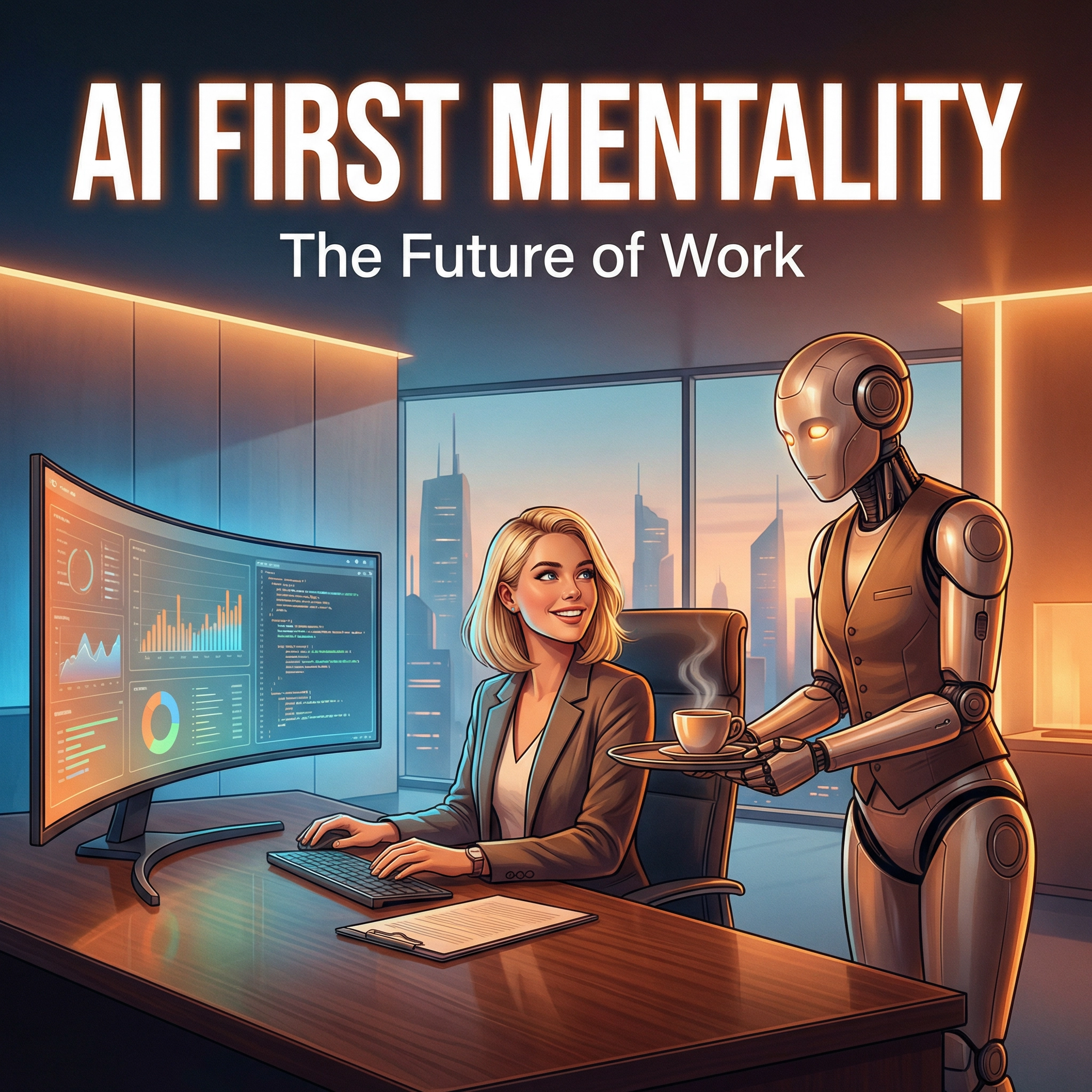
Adopting an AI-first mindset means using AI throughout your day—not just occasionally
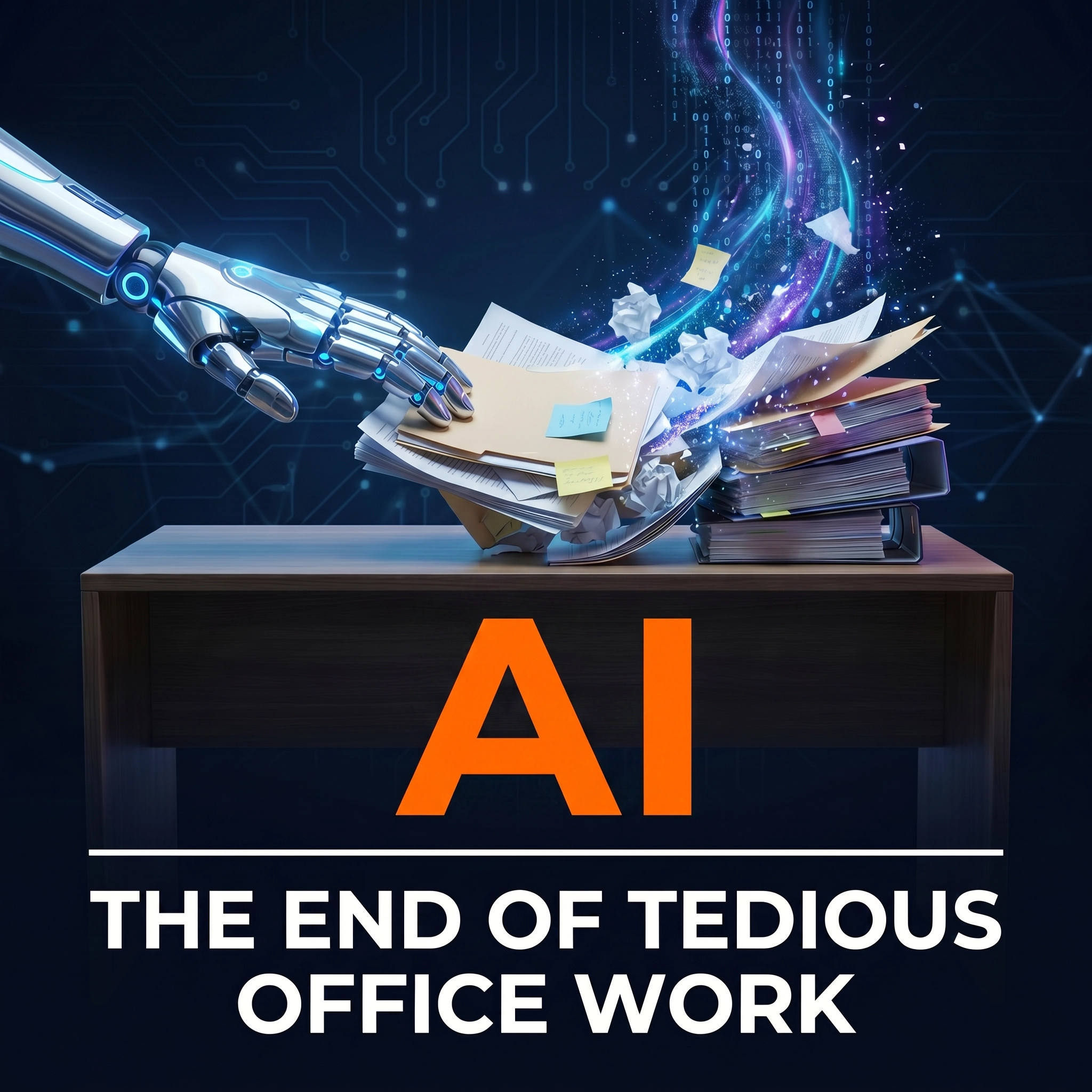
AI is best used for low-value, time-consuming tasks like writing, formulas, and data analysis
It acts as a “third brain” or advisor in meetings, brainstorming, and decision-making
Business owners are using AI for:
Excel formulas and financial modeling
Market research and idea validation
Investor pitch customization
Workflow and operations analysis (even from video)
AI dramatically increases speed, accuracy, and productivity
Creative roles are evolving—success now requires AI fluency + human judgment
The biggest advantage comes from consistent, daily use of AI tools
The future belongs to those who learn, experiment, and integrate AI into everything they do
The AI-First Mentality – Winning in the New Era of Business
Elizabeth Gearhart:
What I'm trying to do with this segment is to give people ideas on how to use AI in their businesses—especially if they hadn’t thought of some of these things.
Kevin Surace:
Think about all of the things you can do every hour with an AI-first mentality. It’s going to change your productivity.
Tyler Dunnigan:
It’s like the third person in a one-on-one meeting. It’s constantly moving and evolving—from market research to analyzing an idea.
Jen Millard:
If you're a graphic artist today, I’d be very concerned. You need to learn AI tools. You’re not going to get paid just to draw pretty pictures anymore.
Richard Gearhart:
A graphic artist of the future is going to be someone who really knows what the options are—and knows which option to use for a particular job.
🎧 Intro
This is Real AI Use Cases – Business Owners Roundtable with host Elizabeth Gearhart, podcast consultant, marketing expert, and PhD researcher using AI every day, and Richard Gearhart, entrepreneur, seasoned business owner, and intellectual property attorney specializing in innovation.
Here’s how real companies are using AI.
🧠 Main Discussion
Elizabeth Gearhart:
Welcome everybody to Real AI Use Cases – Business Owners Roundtable.
Kevin Surace—your life is AI—but is there one way in particular that you’re using AI in your business that you really like?
Kevin Surace:
I’m using it five times an hour.
One example is press responses. I give my opinion, and then I let AI take my opinion—not its opinion—and rewrite it into something appropriate for publication.
I also use it a lot with Excel. Some formulas are so complicated. I just say, “Write the formula for me.” Otherwise I’d spend an hour figuring it out—and why would I? That’s not where I add value.
The value is your experience and your opinion. You say:
“Here’s my experience, here’s my opinion—write the report.”
Let the machine handle the rest.
Richard Gearhart:
Is this your clone by any chance?
Kevin Surace:
I actually did have a Zoom clone for a while—it was hard to tell if it was me or not.
But more importantly, you can do almost anything now.
Take a picture of a meal—AI gives you the recipe.
Analyze a factory video—AI tells you what’s happening and how to improve it.
You should be doing these things multiple times per hour. That’s how you win.
Elizabeth Gearhart:
That’s exactly why we’re doing this—so people can get ideas.
Tyler, no pressure—what’s one way AI is helping your business?
Tyler Dunnigan:
I use it all day—wake up with it, go to sleep with it.
For us, it improves quality of life, accuracy, and speed.
It’s like having a third person in every meeting—constantly analyzing, brainstorming, and challenging ideas.
We use it for:
Building websites
Market research
Data analysis
Brainstorming
It can be creative or analytical—whatever you need.
And for me, it keeps me focused. As a creative, I want to do everything. AI helps keep me on track.
Elizabeth Gearhart:
That’s great. Jen—how about you?
Jen Millard:
We use it heavily for formulas in Excel.
In our business, we deal with complex conversions—ounces, barrels, batch yields. The formulas are intense.
Instead of struggling through them, we let AI generate them.
We also use AI for investor materials. I built my own LLM to customize pitch decks based on investor priorities.
For example:
One investor cares about sustainability
Another cares about economic development
AI helps tailor the story for each audience.
That’s probably our biggest time saver.
Elizabeth Gearhart:
That’s brilliant.
Richard?
Richard Gearhart:
I’ll give a business example and a personal one.
On the business side, I analyzed 42,000 time entries from our law firm using AI.
It gave insights I never could have gotten manually:
Which projects are most profitable
Where revenue is coming from
Team performance
Then I used it to generate management reports.
On the personal side—Christmas decorations.
We had bins everywhere and were paying for storage. I took pictures of the bins and closets and asked AI if everything would fit.
It calculated volumes and created a plan. We eliminated the storage unit.
AI isn’t just a business tool—it’s useful everywhere.
Elizabeth Gearhart:
That’s such a good point.
I recently gave a presentation at Podfest on influencing what ChatGPT says about you.
I asked multiple AI tools for insights—and interestingly, each one said itself was the most accurate.
Richard Gearhart:
Which proves your point—you need to check multiple tools.
Elizabeth Gearhart:
Exactly.
Then I tried using Manus to generate a presentation.
It created a beautiful slide deck—about 70–80% complete. But it needed refinement.
I had to:
Update outdated data
Adjust for my audience
Fix design choices
But it saved a huge amount of time.
Jen Millard:
That’s the key—you still need human judgment.
Also, tools like A+ AI for slides are very strong—but you always need to refine.
And back to graphic design—this is why creatives need to adapt.
Richard Gearhart:
So the skill becomes knowing which tools to use.
Kevin Surace:
Exactly. This has happened before.
Graphic artists used to draw everything by hand. Then tools like Illustrator and Photoshop came along.
Now AI is the next step.
You still need expertise—but the time and cost are dramatically reduced.
A project that took weeks might now take hours.
Tyler Dunnigan:
If you can prompt, you can design.
Kevin Surace:
And tools like Envato Elements are powerful—stock plus AI generation in one place.
Also, Google’s AI stack is impressive:
Improve old images
Generate video from a still image
Create scenes for storytelling
The barrier to creating content has never been lower.
Elizabeth Gearhart:
But learning these tools does take time, right?
Kevin Surace:
Yes—but it’s worth it.
You need to:
Learn prompting
Experiment
Iterate
Sometimes you generate 20 versions to get one right.
But for a few hundred dollars, you can now create what used to require a full production team.
That’s democratization of storytelling.
🎯 Closing
Elizabeth Gearhart:
Thanks everyone—this has been Real AI Use Cases – Business Owners Roundtable.
🎧 Outro
You’ve been listening to Real AI Use Cases – Business Owners Roundtable.
We hope you found this valuable. Join us again for more stories—because the future of business is driven by AI.
Recorded at iHeart Studios in Manhattan as part of the Passage to Profit radio show.
❓ FAQs
What does “AI-first mentality” mean in business?
It means starting with AI as your default tool for tasks like writing, research, analysis, and ideation—before doing them manually.
How often should I be using AI?
High-performing business owners in this episode report using AI multiple times per hour to maximize productivity and efficiency.
What are the easiest ways to start using AI in my business?
Start with:
Writing emails, reports, or marketing content
Generating Excel formulas
Summarizing data or documents
Brainstorming ideas and strategies
Creating or refining presentations
Can AI really replace tasks like data analysis or reporting?
Yes—AI can analyze large datasets, identify trends, and generate reports in minutes, saving hours (or days) of manual work.
How is AI changing creative roles like graphic design?
AI is speeding up production and lowering costs, but human creativity still matters. The future belongs to creatives who use AI tools effectively, not those who avoid them.
Do I need technical skills to use AI tools?
No—but you do need to learn how to prompt effectively. Prompting is quickly becoming a core business skill.
Should I rely on just one AI tool?
No. Different tools (ChatGPT, Gemini, Claude, etc.) can produce different results. It’s often best to cross-check and compare outputs.
What’s the biggest mistake people make with AI?
Using it occasionally instead of integrating it into daily workflows. The real gains come from consistent, repeated use.
Is AI only useful for business, or personal life too?
Both. As discussed in this episode, AI can help with everything from business analytics to organizing your home and making everyday decisions.