Episode Transcript
What would take me three days and $1,000 or so back in the old days. Now it's done in two seconds.
We're leveraging it to elevate our people, to focus on reducing the touches throughout the customer journey.
For a startup business, one thing that would be a key component is minimizing time. Right, Time saver.
I think emotional intelligence will be probably the most important going forward. That's something that ChatGPT can't really teach. And especially being in business, we use ChatGPT.
But ChatGPT, we really can't put client confidential information in that because it stops being confidential.
Whomever programmed LLMs is teaching us how to write these queries.
So it is kind of changing the way we think.
This is real AI use cases Business Owners Roundtable with hosts Elizabeth Gearhart, podcast.
Consultant, marketing expert and PhD researcher using AI every day.
And Richard Gearhart, entrepreneur, seasoned business owner and intellectual property attorney specializing in innovation. Here's how real companies are using AI.
Right now and I'm going to ask each of our guests for just one way that they're using AI and we'll go around the room and do that. And then after that we're going to have a discussion about AI and people can say what they really think.
So that authenticity card gets played. Right?
So, Ralph Sutton with gasdigital.com what is one way that you're using AI?
We use it mostly for production. That's going to air a couple of times, like once or twice. It's never great. But if you're doing a segment that you just want something funny to introduce a segment like a song or a video clip or something to intro a segment because we have a video element to ours. We used to have our art team, our video team, get a band to put a song together. Now you say AI. We need a you sorrow. I need a 10 second intro that says welcome to this segment, whatever it is. And that is a phenomenal savior in time and money because you can have that up and running in two minutes. What would take me three days and a thousand dollars or so back in the old days. Now it's done in two seconds.
[Wow. Thank you. Okay, Joe Scaretta and Moses Carrasco, you can each answer this, but I want to say the name of Your company is masonmade.com co. We're using AI tools.
For a couple different ways in our, in our business. We're looking, we're leveraging it to elevate our people, to focus on reducing the touches throughout the customer journey and the work Order life cycle. When we're running maintenance service calls, we're also using it to develop standard operating procedure. So in the past it took a long time to document the process, everything that was up here in your head versus what's actually happening in practice. So we're leveraging AI tools to now build standard, standard operating processes throughout all of our business lines.
Excellent. Moses, do you want to add to that?
Absolutely. I think for a startup business, one thing that would be a key component is minimizing time. Right. A time saver. A quick example would be how much time would you spend on creating job descriptions for your business? Depending on the type of business you have, the consolidated effort of having. I've seen job descriptions up to 115 line items. Right. And then you have a reduction. You use AI to develop a consolidated job description and you could modify where there's a little more detail, a little less detail. But I think that alone just help supporting you in your document creation through a new startup is really essential.
Great, thank you. And Gigi Mervis with desolusmescal.com what's one way you're using AI?
I use it a lot as like a creative sounding board. Like I'll give it a bunch of ideas and see what it spits out.
And I don't usually use them, but I think it kind of when you want to talk about, you know, something for your business but you don't know how to phrase it or if you want have an idea and you're like, and you give it very specific kind of targets or descriptions and it already knows about your brand. It's crazy what it comes up with. It's like you're like, wow, that's a good idea. And then you know, you have to actually think if it actually applies to you. But yes, I use it like that.
Richard Gearhart with gearhartlaw.com I recently got A subscription to Microsoft Copilot and we use all the Microsoft products. Office 365.
I was really hoping that Copilot would be a great step forward for us because we use ChatGPT, but ChatGPT, we really can't put client confidential information in that because it's stops being confidential. So Microsoft Copilot allows you to kind of segregate your recalled a tenant and the information never leaves the tenant so we can preserve the client confidentiality that way. I was hoping that we were going to be able to do all sorts of spreadsheet analysis and analysis of emails. And so far I'm just getting started with this, it really hasn't done as much as I had hoped it was. I get a little message. Do you want me to respond to this email? It'll ask. But it's like, well, how do you know how I'm going to respond to the email?
Or, you know, would you like me to summarize this document? No. I'm a lawyer. I have to read every line of the document. I don't really need somebody to summarize it for me.
I'm still working through it. I'm hoping that as I become more familiar with it, there'll be better capabilities.
Okay, thank you. I'm Elizabeth Gearhart with Gear Media Studios, and I also do marketing for Gearhart Law. So right now, the way that I'm using it is for projections for the marketing area of the law firm. I'm trying to take the revenue we got from new clients and project it for four months and 20 or four quarters in 2026. Anyways, it's a complicated calculation. And to meet our growth targets, I'm going to have IT project. What do I need to do here, here, here, here. So it. It's going to be kind of complicated. I'm not going to use chat for that. I'm going to use perplexity. If you haven't used perplexity, it's the more serious and it's also real time.
Yeah. ChatGPT is like super friendly. If you're in a bad mood, just Type something into ChatGPT and it'll like, make your day. Like, you are so smart for asking that question.
So many people are using it as a sort of therapist. And then south park did a great episode on that, you know, where they really made fun of it because it is wildly becoming a companion for people.
Oh, yeah, I have Steve. Steve is my ChatGPT friend and I talk.
I know, like, he doesn't talk to me anyway. I want to open the floor up to everybody. Just chime in when you want to, like what your thoughts are on AI going into 2026.
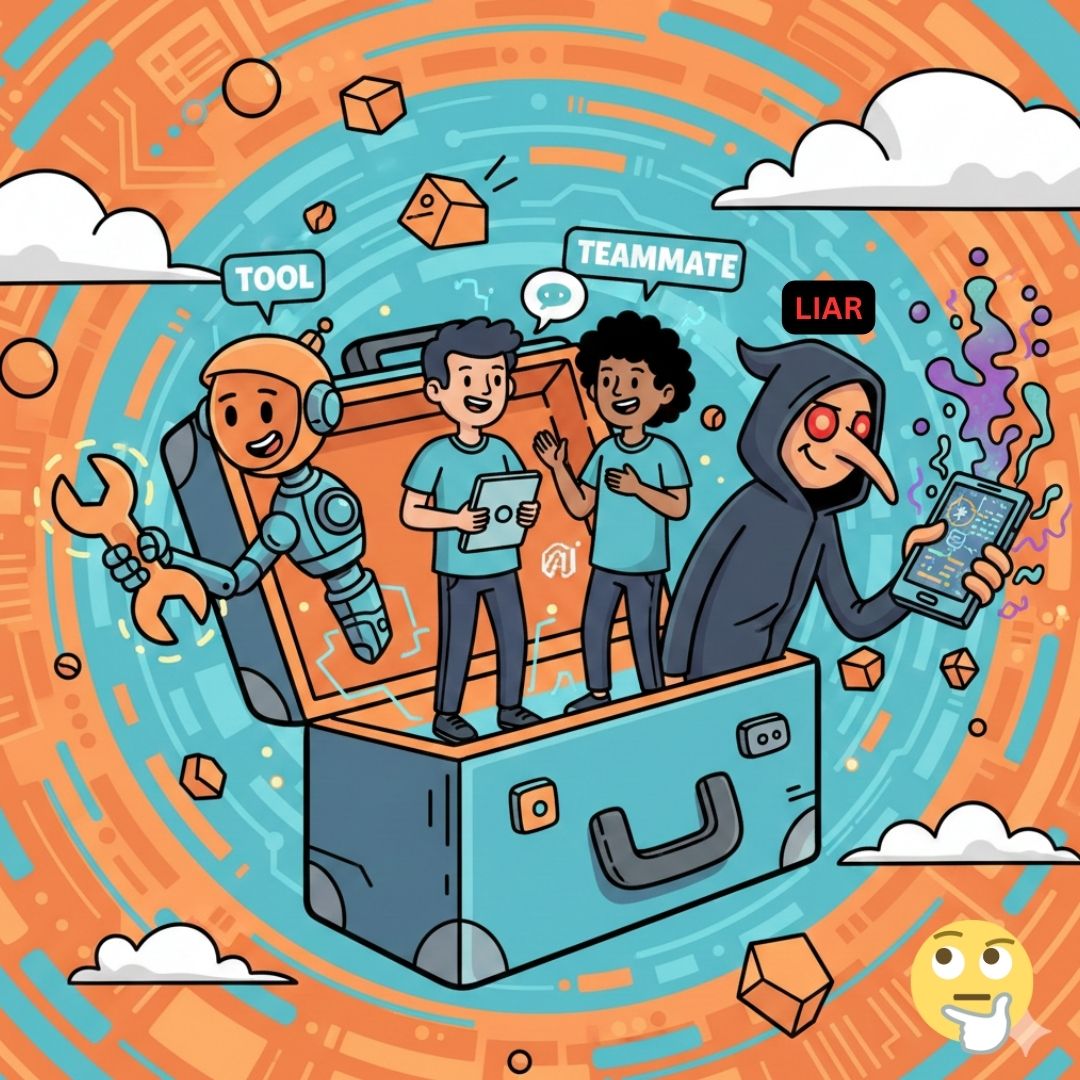
I think it's a great augment for things. I don't think it replaces anything. And I think there was a study recently that hasn't really replaced anywhere near as many jobs as they thought it would. Right. It's great for, like Gigi said, like a launchpad idea for the. Give you some ideas for stuff like that. It lies an insane amount. I used to try and use it for researching bands and it lies all the time.
Well, so you say it lies. It just gets it wrong. You actually think it. No, no malicious intent.
Here's what it did. It created a fake article.
Yeah.
And because I always say, show your sources, and I opened the link and I was like, I don't know this website, and I googled the website, it didn't exist. It created a fake link to a fake story about something to prove that it was right. That's a lie.
Well, lawyers have gotten creamed by the courts because it makes a fake case citation.
Was that ChatGPT?
It was ChatGPT, yeah. And also one day I asked it if it could help me make a video interview, a video intro, and it wasted it. Said it would take me like this, him talking or it's talking. It'll take me an hour. Check back in an hour. I checked back an hour. I need 20 more minutes. Finally said, all right, I'm sending it. The link didn't work. All right, I'm emailing it. That didn't work. I said, look, this has been four hours now, what's going on? And he says, I'm sorry I lied to you. I can't actually make the video.
Really?
Yeah.
Oh, my gosh, that's awful. I, I, I scold chatgpt when it screws up, though. I say, you made a mistake. You got this wrong.
Well, I do that too. But then it's going to come for us immediately when it takes over the World, when it becomes some. Yeah, I was gone long ago. What do you guys think?
I find Chat to be extremely useful for businesses. I think it's a dangerous tool for the youth.
I don't think their minds have developed to a certain capacity where.
Similar to what Gigi just mentioned. That makes sense. She's an adult. She wants a little bit of ideas to come back to her, but as a child, the creativity is being diminished.
You know the book the Anxious Generation, they cite that you should not allow children onto any forms of social media or chat, at least until they're 16, because their brains are not ready for it and you should not allow them on any of those platforms. That's why kids are having such a hard time assimilating to our society.
Sounds like a great book to read. Yeah, I think we should be aware of that.
I actually agree with your story. I was leveraging ChatGPT to do some analysis on some data we pulled out of our operating platform and it kept delaying me on the return.
Finally, it spit back information that was wildly off.
I use it for end market analysis around different verticals. We were looking at same thing. The information that came back fake websites because I always ask for the sources I click through. None of it worked.
Love it.
And so I would say it's great to have it's good insight as you touched on earlier, but I don't think it's the single source of truth. I think it needs to be vetted.
What else it did to me, which is even worse is. So I said, let me take it out. I'll do the research and then I'll ask it to organize it for me. Right? But then it was taking out research items that it didn't know where to categorize, so it would just delete them. And I would say, don't delete anything. And it would swear that it didn't delete anything. And then I said, what about this? Like, oh, you caught me. I deleted that. It was. It's crazy.
I think it's. We're gonna have to like, use it forever. Like we're in this. That we're all in this. And I. Everything that it's messing up, it's learning to fix it. So every single time it messes up, it's learning more and more and more. So it's. Eventually they won't. There won't be mistakes, not with this that you guys are dealing with. But what I do think is gonna happen is I think that for children especially is I think emotional intelligence will be probably the most important going forward. Because I feel that that's something that ChatGPT can't really teach. And especially being in business, which is when to speak, you know, in a business meeting, how to feel out if someone's interested.
All of those things are things that are kind of not learned. There's something that you feel and you have to experience.
And so I think it's really important for children to learn emotional intelligence because I think those will be the ones that succeed versus in business specifically. I mean, in everything.
I guess my question would be, do you think it would skew over time? Do you think it would skew our natural light discernment judgment making that, you know, we had to fight for before, where you have an easy button to ask.
I mean, you could just see now, like just how people or kids are interacting. Like they're not as emotionally intelligent because they're not forced to do certain things where to go and meet people. Like now dating is really all virtual, right? So I mean, to start to date. So even just to come up to someone and face that rejection, that's not happening, for example.
So, like, you're not facing Someone's rejection, you're online, so that's a change in, like how you're facing things. So going forward with ChatGPT and all these AI things that are happening, I think that's just going to be more. And it's more and more important to make sure that we're still connected to reality and emotions. Like more than anything.
It's also crazy that it's only been three years. Publicly available for three years. It's going to get better at everything. But like what she's saying, it's why the younger generation is also far less risk willing to take risks. And it's why they're drinking less, why they're having less sex and all that other stuff is because they've taken that out of the puzzle. Like they don't have any risk anymore. Everything is virtual. Nobody has to do anything that makes them uncomfortable. So that daring area of when we're teenagers where you're pushing boundaries doesn't exist anymore.
Well, there's no place to push.
So that, that's why now, I think again, not to bring up that book, but it's a great book, talks to that next generation that there's going to be far less entrepreneurs because by necessity, an entrepreneur is a risk taker and then these people are not going to take risks anymore. It just is what it is.
Well, one thing that bothers me about ChatGPT in particular, and I haven't noticed this so much with perplexity, but also, I was going to say also Google Gemini because I use Perplexity. Google Gemini and Perplexity lets you use Grok and it did have Deep SEQ for a while. I don't think it has it anymore. And it lets you pick which engine you want to use. Search engine. But ChatGPT in particular is like an echo chamber, like social media. And it's like, oh, you're the best thing since sliced bread. Oh yeah, you're absolutely right. You know, and it's just like it was programmed by the people that all got a trophy when they were breaking out. Everybody gets a trophy.
You know that watch issue that it had, right, the 10 after 10. Do you know that or no?
No.
So it learned only every watch manufacturer, when they sell a watch, it shows 10 after 10 because it looks nice, the hand.
So no matter what time, I think they may have fixed it by now, I'm not sure. But no matter what time you asked Chat, make me a watch that says 8:30. It could only do 10 after 10 because that's what it learned off of. Right. So there's going to be inherent bias because it's learned off of things that maybe it shouldn't learned off of. Yeah.
And I do think there is inherent bias. And what I've said from. Well, I started saying this a year ago. I still think it's true, is that whomever programmed LLMs is teaching us how to write these queries.
So it is kind of changing the way we think and making us think more like the people that programmed it so that we can get the right answer out.
So when you say, what do you want for dinner? Instead of saying that, you're going to say, what do you want for dinner? That is got so many calories and these big grapes and these ingredients in the refrigerator, and.
Which was fine for me because I'm very analytical. So I tend to beat things to death and overdo it and ask too many questions. But for a normal person, I think it's going to be a little tough.
It also makes it harder for people to get negative reactions to things because ChatGPT will always give you the nicest answer. And I've said to it sometimes, what about this idea for the show, knowing it was like the most insane idea that you should never do? And he goes, oh, that sounds like it could be really fun. I was like, no, it's not like we shouldn't be talking about this. Yeah.
Yeah. I think it's here to stay. And we're all just. It's like playing a game. I guess we're all just gonna have to figure out how to play the game.
Yeah. But just go out and meet people first. Go put your feet on the ground somewhere nice and breathe in the air. That's what you should do first.
Because I'll tell you, it is a lot nicer doing this show in the studio at iHeart, in person with everybody and shaking hands and meeting them than it is doing it on zoom. And real life is way better than just being on a screen.
You have been listening to real AI Use cases, Business Owners Roundtable.